
Seasonal guide
Getting your furnace ready for winter
Ogden designs heating systems for 5°F winter days, and your furnace will run hard from November to March. A short fall checklist keeps it safe and saves you a no-heat call in January.
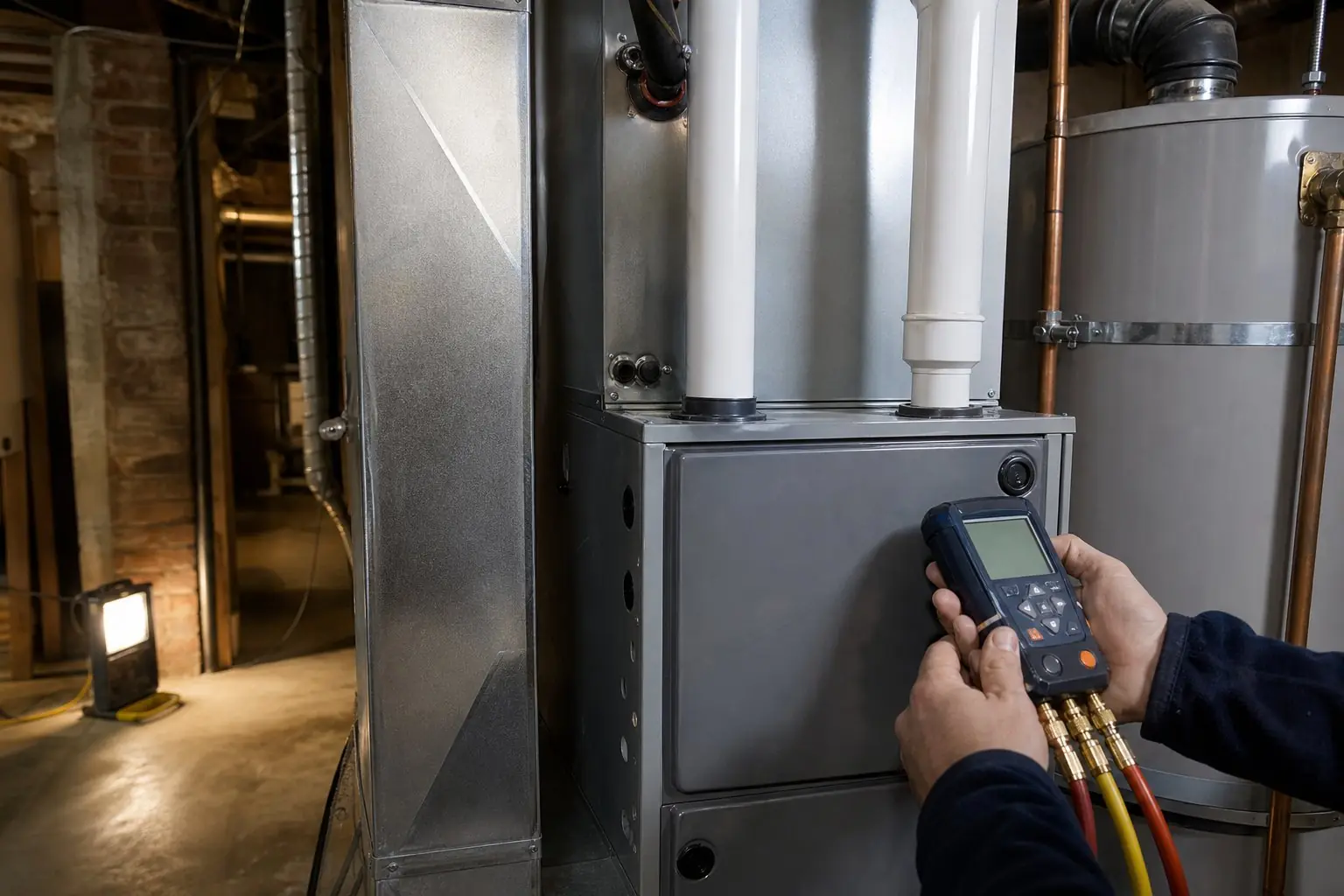
The fall checklist
- Change the filter. ENERGY STAR says to inspect, clean or change furnace filters once a month, and to check heating systems each fall.
- Book a yearly service. The CDC recommends having your heating system, water heater and other fuel-burning appliances serviced by a qualified technician every year. Fall is the time, before contractors' schedules fill.
- Test your carbon monoxide alarms, and add any that are missing (below).
- Clear the area around the furnace and keep vents and returns in the house unblocked.
- Check the thermostat, and replace its batteries if it uses them.
Carbon monoxide: the reason the service matters
A gas furnace that isn't burning or venting properly can release carbon monoxide, which you can't see or smell.
Where alarms go
The Consumer Product Safety Commission says to install battery-operated CO alarms, or alarms with battery backup, on every level of the home and outside sleeping areas. Utah's residential code amendments call for CO alarms on each level of a dwelling where they're required. The CDC suggests checking the batteries when the clocks change each spring and fall.
Know the symptoms
The CDC lists headache, dizziness, weakness, upset stomach, vomiting, chest pain and confusion as the most common symptoms. If an alarm sounds or you suspect CO, the CPSC says get outside to fresh air immediately, then call 911.
If you smell gas
Enbridge Gas (formerly Dominion Energy in Utah) says:
- Leave the area immediately and call 1-800-767-1689 or 911 from a safe location.
- Don't use phones, switches or electronics near the leak, and don't turn lights or appliances on or off.
- Don't start a vehicle nearby, and don't try to find or fix the leak yourself.
Repair or replace?
If the technician recommends replacing the furnace, a few things to know in Ogden:
- It needs a permit. Ogden requires one to replace a furnace; the contractor normally pulls it.
- Size it properly. Ogden publishes design figures for load calculations: 5°F outdoors in winter and 70°F inside. Ask for a load calculation rather than a like-for-like swap.
- Rebates are open. Enbridge Gas's ThermWise program pays $300 for a 95% to 97.4% efficient furnace, $350 for 97.5% or higher with an ECM motor, and $50 or $75 for a qualifying smart thermostat. The federal tax credit for furnaces ended in 2025.
More on licenses, permits and choosing a contractor on our HVAC page, where every listed business has been checked for local ownership, a Utah license and insurance.
Furnace questions
How often should I change my furnace filter?
ENERGY STAR says to inspect, clean or change furnace and heat pump air filters once a month, and to check heating systems each fall.
Do I need my furnace serviced every year?
The CDC recommends having your heating system, water heater and other fuel-burning appliances serviced by a qualified technician every year, mainly to prevent carbon monoxide problems.
Where should carbon monoxide alarms go?
The Consumer Product Safety Commission says on every level of the home and outside sleeping areas, using battery-operated alarms or alarms with battery backup. Utah's residential code amendments also call for CO alarms on each level of a dwelling where they're required.
What should I do if I smell gas?
Enbridge Gas says leave the area immediately and call 1-800-767-1689 or 911 from a safe location. Don't use phones, switches or electronics near the leak, don't turn lights or appliances on or off, and don't try to find or fix the leak yourself.